Candidate Statement of David Rogers

David Rogers is the Liberal Democrat Candidate for Sussex Police and Crime Commissioner

I’ve lived in Sussex for nearly 40 years, over 35 of them as an elected councillor. My children grew up here. It’s a great place to live. Now I want to make it even better and safer.

I know and understand all parts of our diverse area, as during that time I’ve lived in Brighton & Hove, West Sussex and East Sussex.


My priorities:

  • Cutting bureaucracy to help the police spend more time on the streets
  • Giving new powers to communities to tackle anti-social behaviour
  • A new approach to community sentencing
  • Targeting extra resources to cut all forms of domestic violence


As a long-standing member of the Sussex Police Authority until three years ago, including a two-year term as Chair (2001-3), I have a strong track record of working on crime and disorder across Sussex.

It is vital that the new Police Commissioner should stand up for a common-sense approach to crime and antisocial behaviour, as many police officers want.


Work together to cut crime

The Police and Crime Commissioner must work in partnership with others, including councils and local health organisations.

  • Alcohol is a factor in about 44% of violent crime: I will work with the Accident and Emergency services at Sussex hospitals, and local councils, to address these issues.
  • One million women in England & Wales experience domestic violence each year; health services can help support them to report this.
  • Drug users are responsible for over one third of acquisitive crime like burglary: effective treatment can cut their crime levels by about half.

I hope that residents across Sussex will back me on November 15th to act for them.


With best wishes,


David Rogers

Liberal Democrat Candidate for Police and Crime Commissioner
www.david4safersussex.com

Posted in Candidate Statements, Liberal Democrats | Tagged | Leave a comment

Candidate Statement of Marion Mason

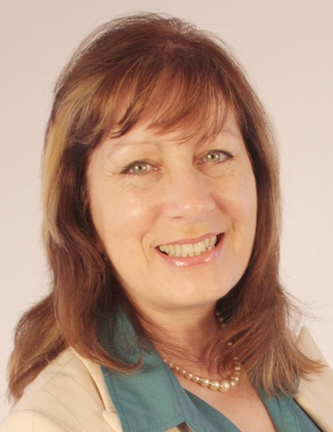
Marion Mason is the UKIP candidate for Police and Crime Commissioner in Hertfordshire.
Marion Mason is a former Stevenage Councillor and has lived in Hertfordshire for 42 years. As a Councillor she was on several Committees: Audit, Scrutiny Overview, Planning and Development.

Marion strongly believes that accountability of the elected Police and Crime Commissioner will give a voice to the public and build trust between the Police and the local community – which Marion is confident she can achieve, due to her knowledge and experience.

Marion has worked as a nurse for over 40 years in N.H.S and Private sector, which included working as an Occupational Health Nurse at former B.A.E Stevenage site.

More recently Marion worked as Manager of a Nursing Home for the elderly and helped commission 140-bedded home. She has experience of working within budgets and financial control – an essential aspect of this role.

Marion empathises with small businesses who cope with high insurance premiums for crime prevention. Marion has experience in small business and was nominated as Hertfordshire’s ‘Business Person of the Year’ in 2006 and 2007. She believes there should be ‘zero tolerance’ of anti-social behaviour.

Marion believes in local support to protect our community-based enterprises and is a former member of a Management Committee for a local community centre and Charitable Trust. She was a Committee Member of the Hertfordshire Nursing and Residential Association and member of the Management Committee of Age Concern.

Marion served as a local School Governor and feels strongly about support for young people and would like to see more facilities in place for would-be Young Offenders. She believes problems materialise at school and ‘suspension’ and ‘expulsion’ are not always the solution.


Marion will campaign for improvements in Victim Support. She will also encourage increased visible presence of ‘police on the beat’ and does not agree with outsourcing sections of our Police Forces.


Posted in Candidate Statements, UKIP | Tagged | Leave a comment

Candidate Statement of Mike Rumble

Mike Rumble is an Independent Candidate for West Midlands Police and Crime Commissioner


The Police and Crime Commissioner elections on the 15 November this year is a historic opportunity to empower the electorate of the West Midlands. It is a genuine chance for the people to voice their concerns and direct exactly what issues, they want their police service to focus their resources upon.


We have some of the finest police officers and civilian staff in the country serving in the West Midlands but due to political medalling, the morale of these officers is at an all time low. 20% budget cuts with more expected in the next few years have brought the service to a near crisis point. The recent report from Her Majesty’s Inspector of Constabulary (HMIC) – Policing in Austerity – one year on, highlights the real concerns about 6% fewer police officers will be on front line roles and state that “Budget cuts are a threat to the long term sustainability of forces to effectively tackle crime and provide the level of service the public rightly expect and deserve”.


If elected, I will do everything in my power to support the staff of the West Midlands Police and, importantly in doing so, I will be supporting the residents of the West Midlands, making sure your voice is heard and that the officers deliver the service we so rightly deserve. As the West Midlands Police and Crime Commissioner I will put in place an immediate halt to the reduction of police and civilian staff. I will also cancel current proposals to contract out parts of the police service to private security companies.


I will instead work with the Chief Constable; the Police Federation, PCSO’s and support staff unions to modernise business and work practices that free officers to patrol our streets, be proactive and innovative wherever possible and reactive when the public need them.


I will also address the public concern about police investigating police complaints. I will negotiate with the Chief Constable to return the police investigators to front line policing and replace them with independent non-police investigators, so that the public can have confidence that complaints are investigated impartially.


I have also set up an on line petition on my website, to have all registered sex offenders GPS tagged whilst they are out in the community. That way we can track where they are in real time and make sure we are doing everything we can to protect our children. You can sign up to the campaign by logging on to my home page.


Politicians have in the main lost the respect and trust of the public and I believe that it is imperative that we make sure that politicians of whatever party do not take control of our police service.


I firmly believe that voting for me as an Independent candidate will provide a truly independent voice for the residents of the West Midlands and job security for police service employees.


Please visit my web site www.mikerumblewmpcc.co.uk for more information and updates.


Posted in Candidate Statements, Independents | Tagged , | Leave a comment

PCC – critical friend or second Chief Constable?

Tom Lloyd is an International Drug Policy Adviser and former Chief Constable

On 22nd November 2012 the new Police and Crime Commissioners will take up their posts with the proper intention of ensuring that Chief Constables’ decisions reflect the priorities of the people they serve.

The challenge for the PCC is to exert that influence without impinging on the operational independence of the Chief Constable. It is quite clear that there should be no influence on decisions to arrest or prosecute alleged offenders, for example, but it becomes, for some, less clear when the longer term deployment of staff is concerned.

It may seem obvious that when a local priority is for “more community officers”, “more traffic cars” or “a Special Constable in every village” then the Chief Constable needs to respond directly and deploy officers accordingly. This, however, would amount to falling into three different and important traps.

First, the “priorities” identified are of the wrong order or type. They are in fact a request for resource “inputs” and not the “outcomes” that the PCCs should be identifying. PCCs should engage with the community by finding out what they want to improve – “outcomes” such as less crime, less disorder and fewer traffic collisions – not how the improvement should be achieved. That is a matter for professionals.

Second, deployment of staff, who and how many will work where and when, must remain the responsibility of the Chief Constable who has the detailed knowledge of staff, their skills and abilities, a responsibility for their health and safety as well as their training and development. Staff cannot be led by two masters.

And third, delivering successful outcomes it not just a matter of deploying more staff to deal with the issue. It will probably involve a complex mix of police staff and officers (warranted) with different knowledge and experience, partners who have knowledge and abilities to bear on the problem, members of the public themselves and a range of technological support. Simply throwing more and more officers at problems – more “bobbies on the beat” – is probably not the best way to deliver results in an increasingly complex policing environment.

The key point is not to jump to conclusions but to try to solve the problem, deliver the optimal outcome, in the most cost-effective way. And this is where the PCC can bring real benefits to the process. Although the Chief Constable will rely on a range of influences to make good decisions, including the new College of Policing, and should use evidence and proven good practice, ultimately the PCC will judge whether those decisions resulted in delivering the benefits that the local citizens identified as priorities.

The PCC should be remorselessly robust in demanding value for money, in insisting on best practice being followed (appropriately locally adapted), in encouraging innovation and in ensuring priority outcomes are achieved. Put simply, the PCC should ask the questions “Why?” and “Whether?” not “How?”.

This approach will properly challenge Chief Constables to do the very best with the resources they have. As well as insisting on the use of proven tactics, it will also drive experimentation, innovation and partnership working.

While we all share concerns about the role and impact of PCCs, we can take advantage of the inevitable by creating the role of critical friend rather than a second Chief Constable.

Tom Lloyd QPM MA (Oxon)

Chief Constable (retired)

tom@lloyd.me.uk

@TomCLloyd

http://tomclloyd.wordpress.com/

Posted in Perspectives | Tagged | 9 Comments

Candidate Statement of Martyn Underhill

Martyn Underhill is the only Independent Candidate for the role of Dorset Police and Crime Commissioner.

He is standing for election because he feels that Party Politics and Dorset Police do not mix.

He believes in “Dorset Solutions for Dorset People”, and wants an Independent voice for Dorset.

Martyn was a Detective Chief Inspector in Sussex, he was second in charge of the Sarah Payne case and went on to be an adviser on the Soham case of Holly Wells and Jessica Chapman. Martyn is an acknowledged expert on child abduction and has recently worked with the media in relation to the April Jones case in Wales.

He retired to Dorset in 2009.

In retirement, Martyn went on to campaign for safeguarding issues, including Sarah's Law, which was introduced into Dorset in 2010.

Martyn is very involved with the community as a Lay Member on the Bournemouth and Poole Local Safeguarding Children's Board. He also sits as a Panel Member for Educational Appeals in Poole and Bournemouth.

Martyn is an operational advisor to the national charity Missing People.

Martyn is a trustee to three Dorset charities and a volunteer for Circles UK (South West) which supervises high risk sex offenders. Martyn is Vice President of Parkstone Rotary Club.

Martyn has a Masters Degree and Diploma in Criminology.


MARTYN'S CAMPAIGN

Martyn has been campaigning for several months, meeting the people of Dorset, seeking people's views of their County, and policing.

If elected, Martyn will engage with the public to address their issues. Martyn wants to create 8 PCC Forums across Dorset, where the public can share their views and experiences of policing.

Martyn's main priority is to re-engage the public with the police, on all levels, and aims to do this by enhancing Neighbourhood Watch schemes to a pan-Dorset level, with support in Police HQ to the Watches.

He also wants to double the amount of Special Constables and Volunteers in Dorset, with Rural and Marine Special Constables being recruited as well.


MARTYN'S MANIFESTO

1. Putting the Victim First.

2. Cutting Crime and Catching More Criminals.

3. Tackling Anti-Social Behaviour.

4. Tackling Domestic Violence.

5. Making our police more visible.

6. Reducing re-offending in Dorset.

7. Protecting our Marine and Rural Communities.

8. Delivering value for money from Dorset Police.

9. Listening to you – The people of Dorset.

10. Securing more funding for our Force.

You don't need to be a party politician to achieve good policing in Dorset.

Please visit my website for a more in depth Manifesto.

www.keeppoliticsoutofpolicing.co.uk

Facebook : https://www.facebook.com/Keeppoliticsoutofpolicing


Posted in Candidate Statements, Independents | Tagged | 1 Comment

How to deliver on promises

Michael Mates is the Conservative candidate for Police and Crime Commissioner for Hampshire and the Isle of Wight

A sceptical electorate as well as political opponents have been left wondering how much is actually affordable from the outlandish claims proposed by some candidates. In Hampshire, one has promised to provide an extra 200 officers ; this without consulting the Chief Constable or declaring where he will find the additional £10 Million in taxes required to fund them – a 10% increase in the police precept on council tax. A brave call in these austere times!

I have looked at realistic and fundable solutions for reducing crime in Hampshire and the IOW. Here is one of the options that I think people have been asking for and which can give them a say in how they are policed. I propose an e-petition for the Police and Crime Commissioner.

I will act on what people raise in their e-petitions on crime and anti-social behaviour. E-petitions will be raised via a link on the PCC website, as well as being available through an App.

When a petition is raised, and enough people sign up to it, (and if it is legal!) then I will guarantee to raise that issue with the Chief Constable. I will tell those who raised the issue when the meeting is planned, I will tell them what was discussed and I will tell them what action is being taken. I also guarantee that everything will be communicated in plain English.

Letting everyone’s voice be heard will be done by giving proportionate weighting to petitions. When I receive one from a less populated area, I will consider the number of people who have signed it. It will be allowed to carry the same weight as a greater number in a more densely populated area. Town and country will have their voices heard in equal measure.

e-petitions will allow communities to raise issues that affect them. It can unite communities through their involvement and it can provide a new communication channel for people in Hampshire and the Isle of Wight. Every time I review my Crime and Policing Plan I will be looking at the petition site and analysing the data to see what trends are emerging. With the public’s help I can get an informed view from all communities which I shall pass on to the Chief Constable.

Too many candidates have talked about who they are and not enough have talked about what they are actually going to do. With ten days to go here is a concrete suggestion for voters in Hampshire and the Isle of Wight.


Posted in Conservatives, Perspectives | Tagged , | Leave a comment

Candidate Statement of Andrew Smith

Andrew Smith is the UKIP candidate for Essex Police and Crime Commissioner.

I have lived in Essex all my adult life where my children were born and raised.

I am a Chartered Accountant helping new businesses to form and grow.  My commercial and professional skills will be invaluable in getting results from shrinking police budgets and building a constructive relationship with Essex Police.

Recent events show that the police need to be properly accountable.  Even good officers can allow standards to slip when not properly supervised.

My first objective would be to re-unite the police and public in mutual trust and respect so together we can prevent crimes and detect those that happen.

I would work for changes the public want including more police officers on our streets (including more Special Constables) and community-based police officers in new local police houses, built by developers.

I want Essex Police to be trusted by the public and to re-focus on the side of the householder and victims.  No one should be fearful of the police but those engaged in criminal or anti-social activity must learn they deserve no favours or sympathy.

I generally empathise with the police but have no past service loyalty which might create difficulties for me in challenging police and the government to up their game.  The Police and Crime Commissioner must campaign with many other agencies outside his control to achieve improvements for Essex.

Posted in Candidate Statements, UKIP | Tagged | Leave a comment

Candidate Statement of Derek Webley

Derek Webley is an Independent Candidate for West Midlands Police and Crime Commissioner

My job will be to make the West Midlands the safest place in the country.

I’ve worked with the police for over a decade, representing the public and making policing more transparent.  I emphasise integrity, honesty and genuine engagement, including supporting communities and the police to stand up to gangs and organised crime. I consistently listen to the public to understand the real issues we face.

Policing can be difficult and complex, yet I have always been, and always will be open to the public, and will bring you into decision-making.  In difficult times my track record shows: I face the public and answer to you.

About me:

  • Active and respected campaigner against organised crime and street gangs
  • First Independent Chairman of West Midlands Police Authority 2009-2012
  • Independent Member of West Midlands Police Authority 2001-2012 
  • Member of National Counter Terrorism Oversight Board
  • Chairman, Birmingham Citizens Community Group
  • District Bishop of New Testament Church of God responsible for Birmingham and Solihull
  • Awarded MBE  in 2007 for services to community relations in the West Midlands
  • Deputy Lieutenant of the West Midlands


My Commitments to you:

  • Protected Communities and Neighbourhoods
  • Police Force Efficiency and Stability without Privatisation
  • Victims First; Criminals to Pay 
  • People not Politicians 
  • Trust and Confidence
  • Without Fear or Favour

 We expect the police to act without fear or favour, and police leaders should be the same.  If a party politician gets elected, they will want to use West Midlands Police for political advantage.  I won’t.


As an Independent:

  • I have no political agenda. I am not governed and controlled by local or national politicians.  
  • I will ensure your voice is heard, and challenge the police where necessary, as I have in the past 
  • I can hold the Chief Constable to account fairly and openly, without turning policing into a political football
  • I promise open and transparent decision-making, building on what I’ve already done to enable you to have your say in policing
  • I will prioritise the policing you need in your area, and not allow policing to skewed by party politics
  • I have built trust, with communities and the police, based on honesty, integrity and genuine engagement 

Posted in Candidate Statements, Independents | Tagged | Leave a comment

The other withdrawal

A fortnight ago Mervyn Barrett withdrew from the Lincolnshire PCC election in a blaze of publicity that continues to burn bright, and in the last week Lee Barron attempted to withdraw from the Northamptonshire race with a fair amount of attention that will follow him where ever he goes. There has been another withdrawal however, not greatly celebrated in the media, that of Charles Swabey in Derbyshire, who got all the way to being nominated, only to withdraw a few days later. For what reason? He didn't want to split 'the Independent vote'.

There's a curious concept. Independents are supposed to be, well, independent, yet apparently they can also stick together. In some places in local government whole swathes of Independents band together to form majorities in a Council, and some suggest they act exactly like political parties but under a different brand. But of course one cannot brand all Independents this way, because they are, er, independent.

If there is a tantalising aspect to the PCC election surely it is the question of whether voters who appear to disapprove of political parties involvement in policing will actually in the end of the day vote for Independents instead. Depending on how you count them there are around 55 people who have parted with £5,000 of someone's hard earned cash because they think they may see it again by getting over 5% of the vote, and may even win.

But will they?

In my view, even if there were a surge of support for Independents, most of them would not win for precisely the reason that Mr Swabey chose to withdraw. One Independent might attract some interest, but more than one would split that interest, and more than two in an election where people only get to vote twice would have been fatal to it.

Where there are two Independents people may think that it's OK, as they can use their supplementary vote to switch from one to the other, but that only happens where one of them gets into the top two in the first round. There are no bronze medals in the PCC elections.

So, while I remain to be convinced that the anti-politics feeling will really crystalise into votes for Independents who people do not actually know, here is my list of areas where I think Independents will struggle the hardest, because there are too many of them (number of Independents in parentheses):-

Cambridgeshire (2)

Devon and Cornwall (6)

Essex (2)

Gwent (2)

Hampshire (2ish) – Don Jerrard is standing under the 'Justice and Anti-Corruption' banner)

Humberside (3)

Kent (2)

Lincolnshire (2)

North Wales (2)

Northumbria (2)

South Wales (2)

Surrey (2ish) – Kevin Hurley describes himself as “Zero Tolerance Policing ex Chief”

Thames Valley (2)

West Midlands (3)

Wiltshire (2)

So in 34 of 41 areas there are Independents standing, but in 15 of them there are so many that they threaten the possibility of Independent success. That makes 19 areas where a powerful surge to the Independents could pay off, but 7 where there is no Independent option, and 15 that share 36 Independent candidates. If this is a shockingly good election for Independents there remain 22 areas where party candidates have an edge, i.e. most of the areas.

There is no allowance here for the force of their personality, the effectiveness of their networks, or the impact of their campaigns. For some this may not be electoral suicide, but it sure looks like the first evidence of lemmings in Devon and Cornwall, and the failure of so many Independents even on a good day could hit the numbers next time round.

Posted in Independents, Perspectives | 6 Comments

The other withdrawal

A fortnight ago Mervyn Barrett withdrew from the Lincolnshire PCC election in a blaze of publicity that continues to burn bright, and in the last week Lee Barron attempted to withdraw from the Northamptonshire race with a fair amount of attention that will follow him where ever he goes. There has been another withdrawal however, not greatly celebrated in the media, that of Charles Swabey in Derbyshire, who got all the way to being nominated, only to withdraw a few days later. For what reason? He didn't want to split 'the Independent vote'.

There's a curious concept. Independents are supposed to be, well, independent, yet apparently they can also stick together. In some places in local government whole swathes of Independents band together to form majorities in a Council, and some suggest they act exactly like political parties but under a different brand. But of course one cannot brand all Independents this way, because they are, er, independent.

If there is a tantalising aspect to the PCC election surely it is the question of whether voters who appear to disapprove of political parties involvement in policing will actually in the end of the day vote for Independents instead. Depending on how you count them there are around 55 people who have parted with £5,000 of someone's hard earned cash because they think they may see it again by getting over 5% of the vote, and may even win.

But will they?

In my view, even if there were a surge of support for Independents, most of them would not win for precisely the reason that Mr Swabey chose to withdraw. One Independent might attract some interest, but more than one would split that interest, and more than two in an election where people only get to vote twice would have been fatal to it.

Where there are two Independents people may think that it's OK, as they can use their supplementary vote to switch from one to the other, but that only happens where one of them gets into the top two in the first round. There are no bronze medals in the PCC elections.

So, while I remain to be convinced that the anti-politics feeling will really crystalise into votes for Independents who people do not actually know, here is my list of areas where I think Independents will struggle the hardest, because there are too many of them (number of Independents in parentheses):-

Cambridgeshire (2)

Devon and Cornwall (6)

Essex (2)

Gwent (2)

Hampshire (2ish) – Don Jerrard is standing under the 'Justice and Anti-Corruption' banner)

Humberside (3)

Kent (2)

Lincolnshire (2)

North Wales (2)

Northumbria (2)

South Wales (2)

Surrey (2ish) – Kevin Hurley describes himself as “Zero Tolerance Policing ex Chief”

Thames Valley (2)

West Midlands (3)

Wiltshire (2)

So in 34 of 41 areas there are Independents standing, but in 15 of them there are so many that they threaten the possibility of Independent success. That makes 19 areas where a powerful surge to the Independents could pay off, but 7 where there is no Independent option, and 15 that share 36 Independent candidates. If this is a shockingly good election for Independents there remain 22 areas where party candidates have an edge, i.e. most of the areas.

There is no allowance here for the force of their personality, the effectiveness of their networks, or the impact of their campaigns. For some this may not be electoral suicide, but it sure looks like the first evidence of lemmings in Devon and Cornwall, and the failure of so many Independents even on a good day could hit the numbers next time round.

Posted in Independents, Perspectives | 4 Comments